
Firearms safety is a critical aspect of responsible gun ownership. Neglecting safety measures can lead to tragic accidents, injuries, and even fatalities. Here are some real-world examples of firearms safety violations, followed by the five essential rules of gun safety to help prevent such incidents.

Real-World Firearms Safety Violations Accidental Discharge: A common example is when a firearm is mishandled, leading to an unintentional discharge. This can happen if the gun is not treated as if it is always loaded. For instance, a person might assume their firearm is unloaded and point it at someone, only for it to discharge accidentally.
Muzzle Direction: Another violation occurs when the muzzle of the firearm is pointed in an unsafe direction. For example, a person might point a gun at a wall without considering what is beyond it, potentially causing damage or injury if the gun discharges.
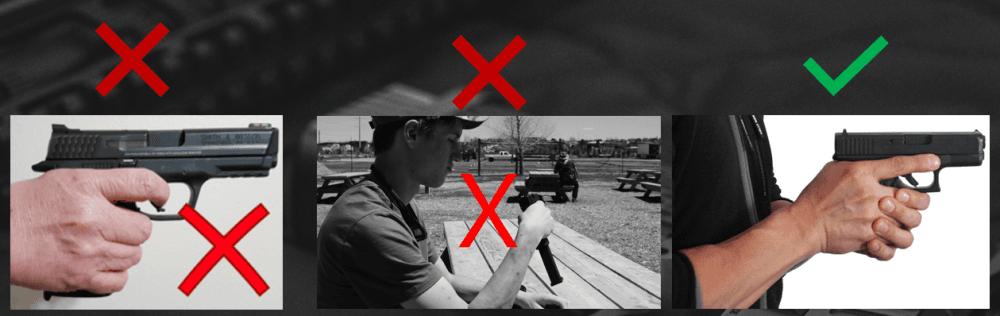
Trigger Discipline: Failing to keep the finger off the trigger until ready to shoot is a frequent cause of accidents. An example is when someone is handling a firearm and their finger rests on the trigger, leading to an accidental firing when they stumble or drop the gun.
Target Awareness: Not being sure of the target and what is beyond it can result in unintended harm. For instance, a shooter might fire at a target without checking for people or objects behind it, causing unintended injuries or property damage.
Safe Storage: Improper storage of firearms can lead to unauthorized access, especially by children. An example is when a firearm is left loaded and unsecured, and a child finds it, leading to a tragic accident.
The Five Essential Rules of Gun Safety:
(1) Treat Every Firearm as if It Is Loaded: Always assume that a firearm is loaded, even if you believe it is not. This mindset ensures that you handle the firearm with the utmost caution.
(2) Never Point the Muzzle at Anything You Are Not Willing to Destroy: Always keep the muzzle pointed in a safe direction, away from people, animals, and property. This rule helps prevent accidental injuries and damage.
(3) Keep Your Finger Off the Trigger Until Ready to Shoot: Keep your finger outside the trigger guard and alongside the firearm until you are ready to fire. This prevents unintentional discharges.
(4) Be Sure of Your Target and What Is Beyond It: Before you shoot, be certain of your target and what lies beyond it. Bullets can travel through targets and cause unintended harm.
(5) Store Firearms Safely: Always store firearms in a secure manner, away from unauthorized individuals, especially children. Use gun safes, lock boxes, or trigger locks to prevent access.
By following these essential rules of gun safety, you can help ensure the well-being of yourself and those around you. Remember, responsible gun ownership is not just about knowing how to use a firearm, but also about practicing safe handling and storage at all times.
Stay safe and responsible!